

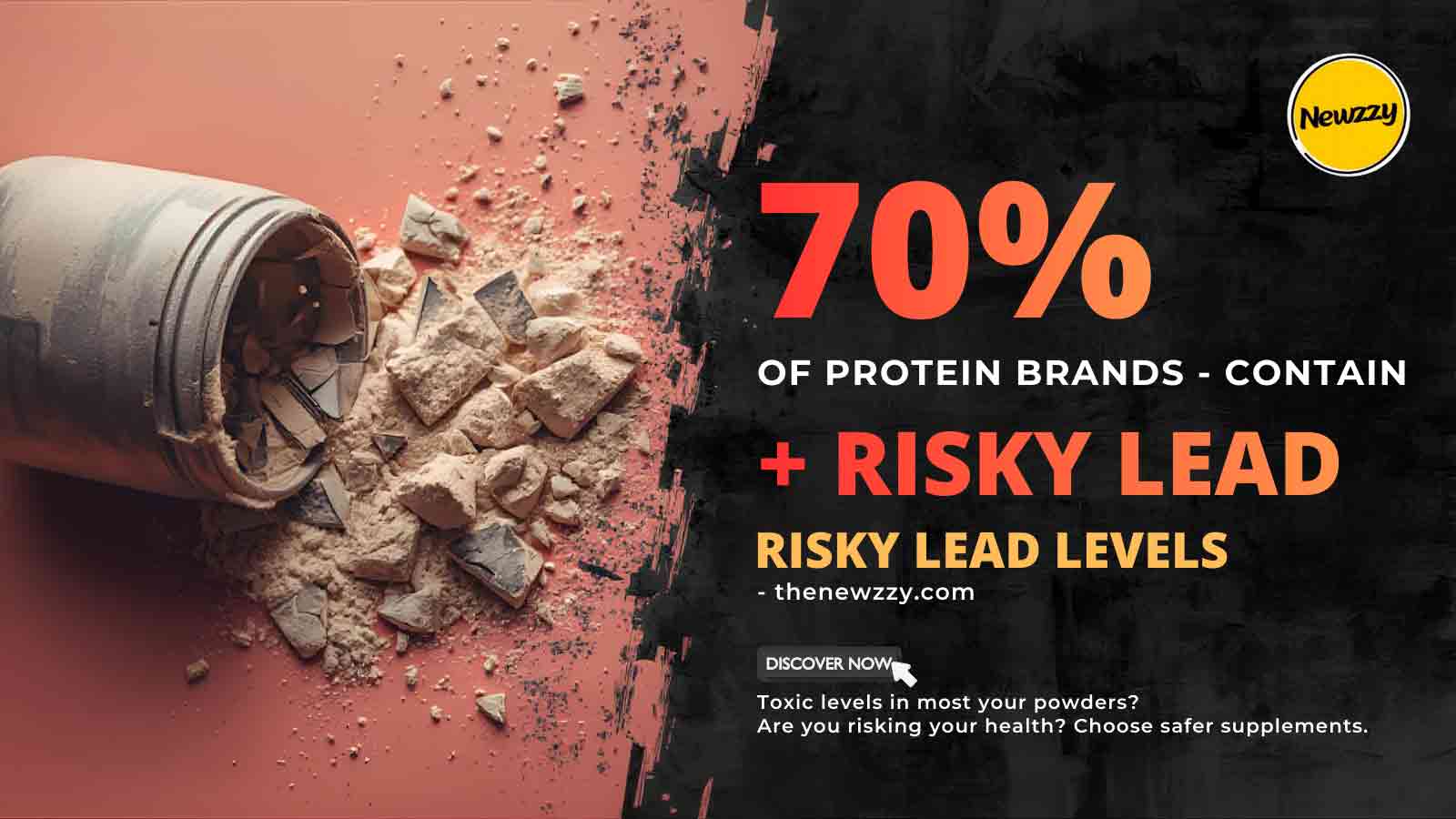
Protein Powder Contamination Report: Two recent studies have revealed a shocking reality on the protein powder business sector in America worth 28 billion. The vitamins the millions of people take every day to maintain their health are laced with heavy metals that are toxic. This issue is deteriorating instead of improving. Consumers tend to think that such products help them to enhance their body fitness but lab results expose otherwise.
Read About: GLP-1 Weight Loss Drugs Safety Analysis
Table of Contents
Statistics of Critical Levels of Lead in Protein Powder Brands
- In October 2025, Consumer Reports tested 23 items and found that 70 percent of the product contained high levels of lead despite being declared as safe.
- The Clean Label Project found 47 percent of 160 products had breached federal or state safety standards in January 2025.
- The plant proteins have 9X lead when compared to dairy proteins.
- Organic products have 3 times more lead than the conventional protein powders.
- The international market has already hit the mark of 28 billion in 2025 and it is going to surpass very high standards of 50 billion by 2030.
Why Critical Levels of Lead in Protein Powder is Risky?
About 46 per cent of American people take protein drinks as a dietary supplement. These supplements are not necessitated to undergo pre-market tests by the FDA. This is negligence which enables the contaminated products to be served to kitchen counters in the country. Excessive exposure through chronic exposure leads to accumulation of heavy metals such as lead in the body. Cases of this accumulation pose the highest danger to children and pregnant women. You can be healthy today and in the process of carrying with you toxins that can affect your future health.
List of Protein Powders With Heavy Metals
Laboratory test revealed some particular products, which are very dangerous health wise. The levels of heavy metal in these products are way above the safety levels set.
Protein Powder to Avoid Under all Costs
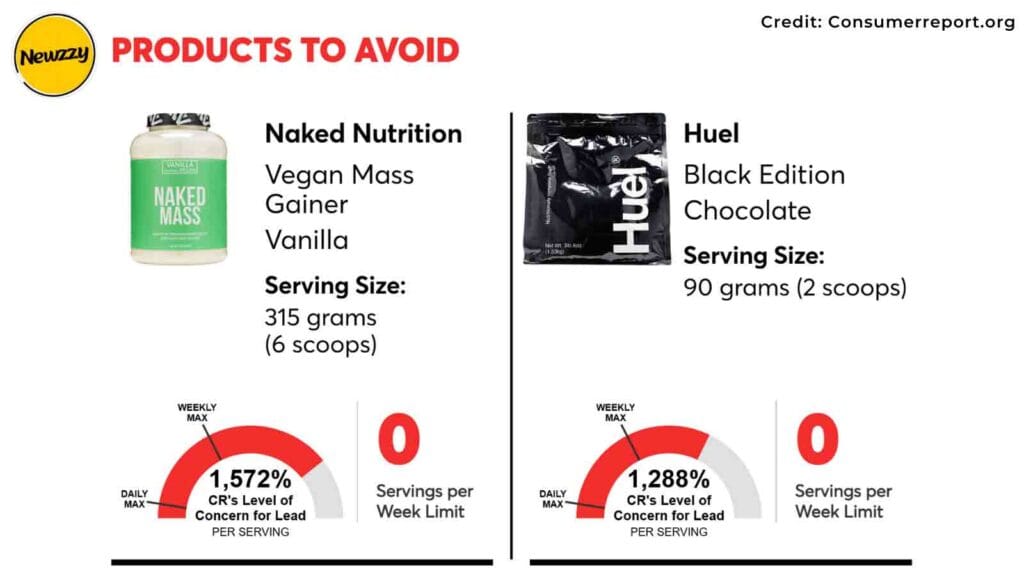
Naked nutrition Vegan Mass Gainer (vanilla)
- Lead Level: 7.7 mcg per serving.
- This is 1,570 per cent above the safe limit.
- This giant exposure is brought about by the size of the serving 315g.
The research conducted by the Consumer Reports noted that people are not supposed to use this product. Although the company claims that the lead is natural, and the outcome of a 315g serving size is massive, the exposures obtained are extremely high as compared to regular shakes. The factor is the large amount of glycemic index of maltodextrin, which is able to spike blood sugar.
Huel black edition (chocolate)
- Lead Level: 6.3 mcg per serving.
- This amount is 1,290% over the limit.
- This product was also over 9.2 mcg of cadmium.
Consumer Reports advises the avoidance of this supplement. Huel disagrees with these results, citing it to their own internal testing having averages of 1.8 ug and saying that chocolate flavors naturally are higher in lead, simply because of the cocoa. The level of 1.8 ug is not only higher than the strict limit of 0.5 ug but also far below the overall adult safety standards of the FDA.
Recommended Products to be Reduced to Once a Week
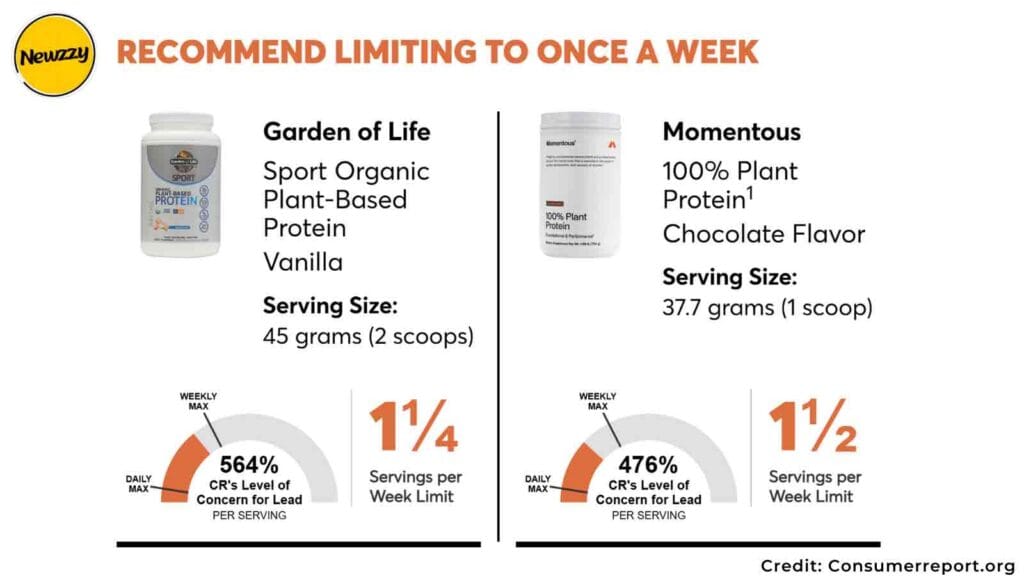
Garden of Life Sport Organic Plant Based Protein
- Lead Level: 2.8 mcg.
- This is 564 percent past the recommended daily limit.
Organic label leaves no trace about whether the product contains heavy metals. Certified Organic and NSF Certified Sport. Although certain plant proteins have been questioned over heavy metals (which are natural in the soil), the Garden of Life, the brand in question, also has its Sport line which is tested to guarantee that even the levels are not in unsafe ranges.
Momentous 100% Plant Protein
- Lead Level: 2.4 mcg.
- This is 476% over the limit.
This product has been stopped by the manufacturer, yet there are notable numbers of consumers who are still holding it at their places of residence.
The Contamination Pattern
It can be seen that there is a definite trend in data on which products do not pass safety tests. Plant-based foodstuffs are all the worst offenders. Pea protein is found in all products that are highly contaminated. The higher the serving size of a product, e.g. mass gainers, the more of this toxin you are exposed to. By eating a big scoop of plant protein you are consuming more lead with each beverage.
Plant Vs Dairy Protein Powder Contamination Difference
Your protein source defines your risk profile of heavy metal. Plant proteins and dairy react on various environment levels.
The Protein Source Matters
- Plant- Based Proteins: These have an average of 9X more lead than whey. They also have 2 times higher lead than beef based powder.
- Dairy-Based Proteins: These, as a rule, have the least amount of contamination. The best of the safety categories was with the use of whey isolates.
How More of the Heavy Metals in Plant Based Protein Powder?
Direct uptake onto the soil takes place through plants which absorb lead and cadmium. Absence of volcanic rocks in certain growing areas also erode them resulting in the natural abundance of these metals. The industrial pollution also establishes into the soil where crops are planted. The content of fertilizers and pesticides is usually of heavy metal traces which are absorbed into the structure of the plant. Its complicated procedure of extracting a pea into a powder gives the pathogen more reasons to contaminate the item.
Organic Protein Powder Heavy Metals Report
The label Organic has a deceiving effect. There is 3 times higher lead and 2 times more cadmium in organic products as compared to the conventional products. The natural heavy metals that are abundant in organic soil are often absorbed by plants. The degree of risk is also altered through flavoring. The chocolate flavors have up to 4 times more lead and 110 times more cadmium as compared to vanilla. The natural occurrence of cacao plants is able to absorb heavy metals in the environment.
Safety Tests of Heavy Metals in Protein Powders
The reason is that by knowing the methodology of these studies it is easier to understand why the findings are so alarming. Scientists came up with advanced instruments to discover the invisible.
Consumer Reports Study (October 2025)
Consumer Reports read 23 products of large brands. These were anonymously purchased by them on Amazon, Walmart, and Whole Foods so that they could test what consumers purchase. The researchers employed ICP-MS that is Inductively Coupled Plasma Mass Spectrometry. It is an accurate laboratory equipment in the process of measuring metals. They established the safety level at 0.5 mcg daily. This is the same as the MADL, or Maximum Allowable Dose Level, which has been defined by the California Prop 65.
Clean Label Project Analysis (January 2025)
The Clean Label Project has surveyed 160 products on 70 brands. This research had an area of coverage of 83% of the entire market. Their analysis was 35,862 lead, arsenic, cadmium and mercury data. They also tested the packaging packaging on BPA and BPS. They were able to repeat their findings and found that 47% of products are above at least one regulation guideline.
The Threshold Controversy of Heavy Metals in Protein Powders
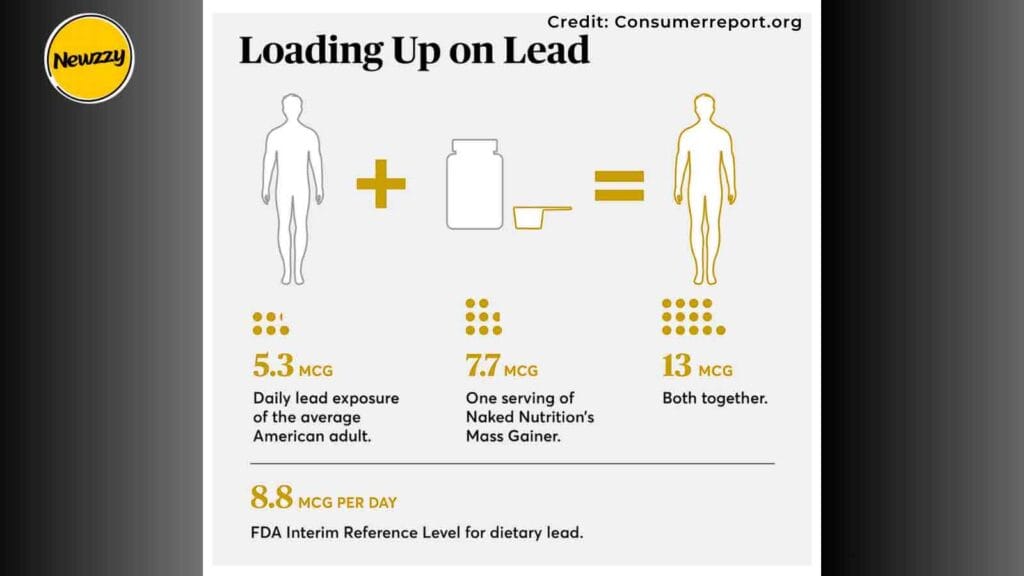
There is a large controversy on the amount of safe level of lead.
- Consumer Reports: 0.5 mcg/day (The protective standard maximum).
- FDA Interim Reference: 8.8 mcg/day at the adult age.
- NSF Certification: 1 mg/day maximum.
The Reality: It takes the average American takes 5.3 mcg of lead in other food sources everyday already. The inclusion of a protein powder tends to exceed the FDA own safety level of daily consumption.
Chronic Health Risks of Protein Powder Contamination
The FDA research indicates that there is no technically safe amount of lead that can be consumed by human beings. Lead is an accumulative poison, which remains in your system over a period of years.
The Greatest Number of Vulnerable Populations
Children are under the greatest risk due to the fact that lead disrupts development of the brain and nervous systems. Expectant women should watch out very well as lead traverses the placenta and has an impact on the unborn baby. Lead in the bones is deposited in women of child bearing age. When pregnant the body will release such themed lead into the blood which will finally make it to the developing baby.
Documented Health Effects
- Neurological: Lead involving neurological symptoms induces learning delay and behavioral issues, and it also leads to low IQ.
- Cardiovascular: Chronically exposed to it, results in heart disease and high blood pressure.
- Renal: Lead results in damages to the kidney and the body is unable to purify waste.
- Reproductive: The high levels result in fertility and pregnancy complications.
The Daily Use Problem of Protein Powder
Protein powder is a daily routine to most people as opposed to a treat. A large number of athletes take a minimum of two meals daily. This rate creates bioaccumulation, which is a process where the toxins accumulate in your body at a rate, untenable to your abilities of getting rid of them. A single dose of the most-adverse-tested products surpasses the daily limits of the lead dose in an adult. The damage will not present itself as such in the short term, but accrues silently over time in the months and years.
The Regulation of Using Heavy Metals Protein Powders
The supplement market is very leniently regulated by the government. This regulatory vacuum shifts all the responsibility of safety on the consumer.
Current FDA Oversight of Protein Powders
Protein powders are not subject to pre-market approval by FDA. The aspect of self-police lies on the manufacturers about their safety standards. Federal limitations to heavy metals in protein supplements do not exist at present. Approximately 5 percent of manufacturing plants are inspected by the FDA per annum. This implies that the products that enter your kitchen are unsafe, and the issue is only noticed by a government agency.
State Vs Federal Standards For Protein Powders
The standard in California is the most protective in the country provided by the Prop 65. It mandates warning label in case a product contains more than 0.5 mcg of lead per day. Through consent decrees permitting increased standards many firms combat these standards. In other states, the standards of heavy metals in food are virtually non-existent. This non-uniformity enables the companies to establish their own levels of safety depending on their internal objectives.
Industry Response
Trade associations such as the council of responsible nutrition deny the conclusions of lab research. According to them, the limit of 0.5 mcg is misleading. The NSF certification is mentioned in many firms, permitting 10 mcg of lead. This is 20X that of the California standard of safety. There is opaque nature of the industry and there is absence of federal enforceable limits.
Safer Alternative and Practical Guidelines
Protein supplements can still be used provided that you select those products which are confirmed to be low in contamination levels. Organic foods are the safest source of food.
Best Protein Powders with Less Heavy Metals
According to the level of heavy metals in the tests in 2025, the following products demonstrated the minimum level:
Momentous Whey Protein Isolate
- Only 30 percent of the level of concern was contained.
They are Informed Sport Certified and NSF Certified Sport. This is the utmost third-party validation. They do not use artificial sweeteners and instead they employ traceable and premium ingredients. We do not have any harmful substances here.
Dymatize Super Mass Gainer
- It consisted of 25% of the concern level.
Artificial Sweeteners: Both are based on Sucralose and /or Acesulfame Potassium. According to some studies, these have the disadvantage of influencing the gut microbiome adversely. This was among the few mass gainers that did not have any lead in the 2025 investigation. In case of concern regarding heavy metals and requirement of the calories, this is the best available option of mass gainers at present.
Muscle Tech 100% Mass Gainer
The lead content of this product was not found. Findings were similaCredit: Consumerreport.orgr to the Dymatize Super Mass Gainer. More safe protein powders list.
Other Risky Protein Based Products
- Artificial Flavors: These are flavors which are chemically produced and they do not disclose the sources of artificial flavors.
- Gums & Fillers: These contain thickeners such as Xanthan gum or Carrageenan which in high concentrations will cause intestinal discomfort to the sensitive individuals.
- High Maltodextrin: This is a carbohydrate that is very processed. It is capable of inducing major blood sugar spikes in these huge bulk amounts.
How to Select Safe Protein Powders
- Protein sources in favor of Dairy Replace plant with Whey protein isolate is always the cleanest.
- Avoid Red Flags: Not to eat giant mass-eater types of food and chocolate types.
- Raise the Red Flag of Third-Party Testing: Search NSF Certified for Sport or Informed-Choice seal.
Protein Powder Alternative
A nutritional study indicates that the average American already consumes more than 150 percent of what he or she needs in nutrition in food. The average individual requires only 0.36g of protein per pound mass. A balanced diet will fulfill these needs with ease.
- Greek Yogurt: 20g per cup.
- Chicken Breast: 31g per 4 oz.
- Lentils: 18g per cup.
- Tofu: 20g per cup.
Protein Brand Company Response To The Safety Tests
The majority of brands answer such investigations by denials or technical disagreements. Most of the time they claim that heavy metals are natural in the ground and they are inevitable.
Denials and Disputes
Often companies allege that consumer report standards are so protective. They refer to their own testing which are less strict according to FDA or NSF standards. Only 2 out of 23 brands used in the test actually post their complete results online to be viewed by the consumers. The majority of manufacturers simply do not give out a Certificate of Analysis unless one of their customers asks to acquire it.
Brands Taking Action
Others have reacted to the information by revising their culture. Vega has switched its sourcing of pea protein in China to North America to curtail the lead level. Momentous reformulated their recipes and stopped their most polluted items. Such measures demonstrate that business firms can demonstrate much in reducing risks even where they consider consumer health and not only profit margins.
What to do if you have used contaminated Protein Products?
You need not panic as long as you have used one of the products found under the avoid category. You can make your own body gradually get rid of lead provided you cease the exposure.
Immediate Steps
- Compare your present protein powder with the results of the study.
- Discontinue the use of the product that can be referred to as a high-risk offender.
- Send the product back to the store to get the refund instead of disposing it.
- Replace with a confirmed dairy based protein or whole-food.
Nutrition and Health Assistance
You need to speak with a healthcare professional in case you have children who are young or pregnant. To determine your exposure, you can order a test of blood lead level. There are some nutrients that prevent absorption of lead in the body. A high calcium, iron, and Vitamin C diet will ensure a natural immune to the uptake of heavy metals. Also, you need to notify FDA of any adverse events in the Medwatch system.
Call to Action and Conclusion
The contamination issue present in the protein powder industry is not something that the government is resolving at this time, as 70 percent of all the products contain more than 70 percent of the safe lead level and 9X as much as the dairy products. The risk when you purchase a supplement is all yours since no pre-testing occurs in a federal way.
Key Takeaways
- Organic does not imply that it is free of heavy metals.
- Whey, which is a dairy based supplement, is usually the most clean.
- The surest method of absorbing protein devoid of the toxins is through whole foods.
- The only method through which the claims of a company can be checked is through third-party testing.
Take Action Today
Evaluate your protein powder and compare your list with the lists below in this inquiry. Spread the news to friends and other family members who take supplements. Ask companies that sell the goods you like, to post their heavy metal tests on the internet. Encourage the new law which stipulates that the FDA establish compulsory safety concentrations of any supplements. It is more than a shake to your health.
