

Emmanuel who is 12 years old sits on an old engine block at the e-waste dumpsite of Agbogbloshie in Accra Ghana. He breaks into a cathode ray tube with the aid of a jagged rock. His skin is covered with black smoke of the fires near him. He uses his afternoons to burn the plastic covering of copper wires onto which probably began their lives in laptops sold in New York, London, or Berlin.
Emmanuel is making about two dollars a day. At 15 years of age, he will probably experience irreversible lung condition and cognitive deficit due to chronic lead and mercury exposure. Agbogbloshie is the largest online cemetery in the world and it is made by the recycling programs that we are supposed to put our faith in.
The total e-waste that was produced in the world in 2022 was 62 million tons. The 22.3 percent were only recorded to have been recycled. The rest of the 77.7 percent or 48 million tons merely discharged into the unrecorded channels. This is what is happening with e-waste crisis, a 19-billion-dollar illegal trafficking business that literally poisons millions of children as we improve our phones.
Table of Contents
E-Waste Is 5 times Increasing & Recycling
The international craving of electronics has hit the wall. Disposing gadgets is a process that is much faster than we can process them without incidents.
Growing Statistics of E-waste
- 2022 Generation: 62 million tons (an average of 7.8 kg per person).
- The Growth Trend: If compared to 2010, e-waste has grown by 82 percent.
- Projection 2030: We are currently on course to reach 82 million tons per annum, which is another 32 percent growth.
- Recycling Gap: As e-waste increases by 2.6million tons annually, reported recycling increases by 0.3million tons. This implies that e-waste is growing by a rate of five times as compared to the rate at which we recycle it.
Where E-Waste is Coming From?
E-waste does not have a balanced distribution. Europe is the source of the greatest waste amount per capita (17.6 kg) but also the highest rate of recycling (46). Africa on the other hand produces the smallest (2.9 kg per person) but is the major recipient of the waste toxic elements in the world.
What is E-Waste?
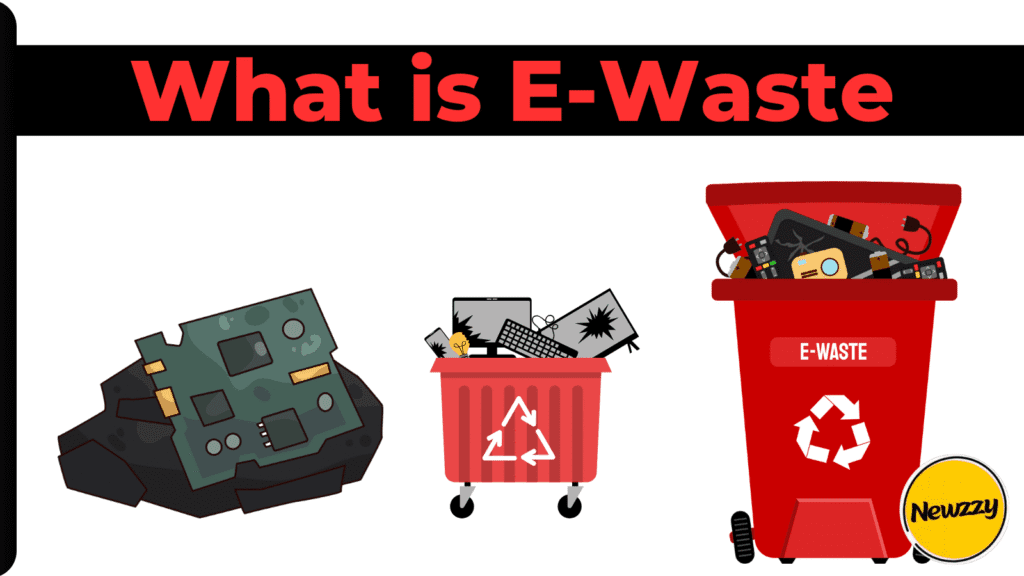
E-waste will include all of the plugged or battery powered items. Even though big equipment such as refrigerators and microwaves constitutes a huge proportion, there is the fastest growing category which is the small electronic.
- The Vape Crisis: Disposable vapes are a cat-giant in the making. Put end-to-end, the vapes sold within a single year would form a 7,000 mile line.
- IoT Devices: Smart toothbrushes, connected toys as well as low-cost LED bulbs are adding to a flood of 45 billion kg of little equipment yearly.
The Hiding Secret E-Waste Worth of $91 Billion a year
We are really squandering a fortune. The concentration of precious metals in the crust of the earth is much lower than that of the present-day electronics which are known as urban mines. More Gold is dropped than we are mining.
E-waste has a total value of recoverable materials in 2022 to the tune of 91 billion. Only 19 billion of that worth was recovered. The rest of the 72 billion money went into landfills or unapproved burning pittals.
| Material | Estimated Value in 2022 E-Waste |
| Copper | $19 Billion |
| Gold | $15 Billion |
| Iron | $16 Billion |
| Silver | 1,200 Tons (Total Volume) |
A single ton of mobile phones has approximately 340 grams of gold. By comparison, a one ton of the gold ore of a good mine bears on average only 5 or 7 grams.
The Rare Elements Crisis in E-Waste Dumps
Green energy needs rare elements such as neodymium, lithium, and cobalt, which are key materials in the high-tech displays.
- The Recycling Failure: The rate of recycling of REEs is also less than 1% as it should be critically important.
- Lithium Waste: In the year 2022 alone, the lithium that was disposed of in vapes made up of over 5% of the world supply.
- Efficiency: The extraction of the metals out of the e-waste is estimated to be 2 to 10 times more power-effective than extractions through virgin ore.
Journey: The Unlawful Tribal Path
You would want a laptop to be dealt with in a responsible way when you drop it in a retail collection bin. Reports by Basel Action Network and journalists demonstrate a far more sinister trail.
The Broken Promise
According to the estimates provided by the United Nations Environment Programme (UNEP), 60 to 90 percent of the e-waste in the world is either traded or dumped illegally. Traders utilize the loopholes in Basel Convention to circumvent the export bans. They describe the deliveries of damaged electronics as the used goods or charity deliveries. In 90 days, a US bin with a GPS tracker can be in a burning pit in Africa.
Major E-Waste Dumping Hubs
- Agbogbloshie, Ghana: It is the center of the digital trade and it is referred to as Sodom and Gomorraw.
- Lagos, Nigeria: A giant West African trading post of so-called second-hand electronic scrappies.
- Delhi, India: Informal zones such as Seelampur accept thousands of tons of zero safety regulation.
- Karachi, Pakistan: An increasing dumping spot of European and American garbage.
E-Waste Recycling Process
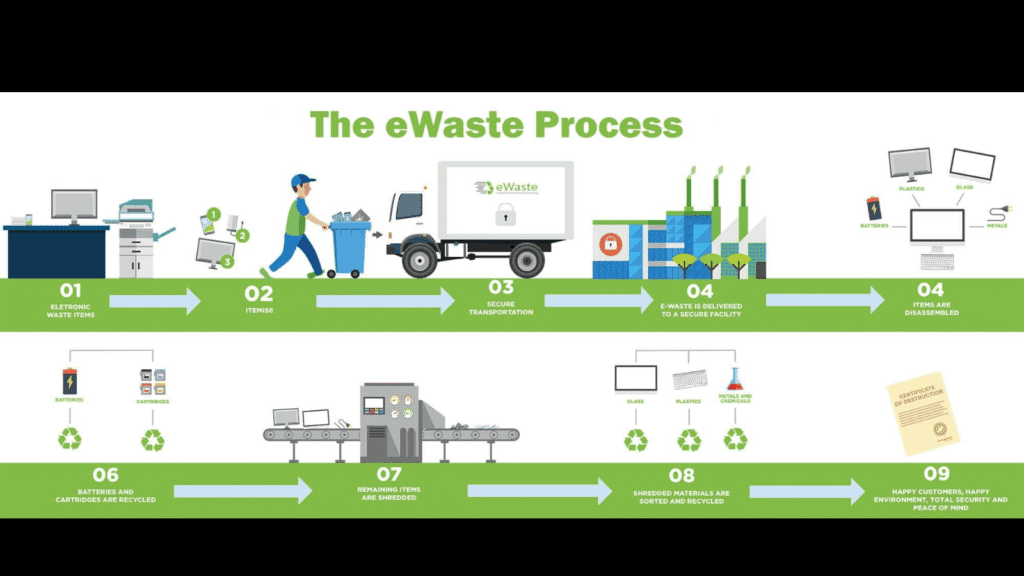
Informal workers employ crude, dangerous techniques: Since formal recycling is costly, they engage in informal recycling.
- Open Burning: Plastic casings are burned by workers to extract copper, to release dioxins and furans.
- Acid Baths: Gold is dissolved in acid baths of circuit boards. The remaining toxic sludge is dumped straight on the ground or on the nearby rivers.
- Manual Smashing: the CRT monitors are whacked down with hammers, releasing the clouds of neurotoxic lead dust.
16.5 Million Children at Risk Due to E-Waste
A disaster in human rights is the e-waste crisis. It is aimed at the most disadvantaged members of the society: children and expectant women.
Children Labor in The E-waste Dumps
According to the estimates of the International Labor Organization (ILO) 16.5 million children are engaged in the industrial waste industry. Such children are in demand as their little hands will be able to pry open small parts and stand in the rubbish.
E-Waste Health Effects
Children do not merely shrink adults, and their growing body systems are more violent in regard to toxicity.
- Lead Poisoning: Lead exposure at these locations is associated with a 5 to 10 point decrease in the IQ, behavioral problems and learning disorders.
- Respiratory Failure: chronic bronchitis and retarded lung development are the constant results of constant inhalation of plastic smoke.
- Exposure to Mercury: Mercury diffuses through the placenta, and it contaminates the breast milk and causes prenatal damages before the child is born.
- The Reality: The level of lead in the soil in the area of Agbogbloshie has been found to be 100 times more than the levels of lead in the background. The level of lead in blood of the local children is often 3 times greater than the safe level.
Environmental Effects of E-Waste
E-waste emits more than 1000 various toxic materials into the environment. These are chemicals which do not die, but which are bioaccumulated in food chain.
- Soil Contamination: Because of the heavy metals such as cadms and chromium that get into the soil, they remain there centuries after and they cannot produce crops that are safe.
- Water Supply: Due to acid run-off by informal processing, the drinking supply of water is poisoned over a stretch of miles.
- Air Quality: PM 2.5 particulates emitted by burning e-waste is 20 times higher than the safety guidelines recommended by WHO.
- Bioaccumulation: Livestock grazing around the areas accumulates the toxins in their meat and milk which are sold in the local markets.
Policy Failure/Greenwashing
The present day regulatory system is not to prevent the circulation of toxic waste.
Why the Law Is Failing
Basel Convention does not allow the export of hazardous waste except it is strictly enforced. Control on the borders is seldom conducted, and bribery has a way of passing ships carrying contraband. There are 81 countries with e-waste policies in place nowadays, and 67 of them actually implement the rule of Extended Producer Responsibility (EPR).
Corporate Greenwashing
Most tech leaders advertise their carbon neutral ambitions and have their recycling information hidden.
- The Liability Gap: When the device is discovered in an unlawful dumping place, businesses usually accuse rogue contractors to get out of responsibility.
- Cost Incentives: Recycling a device in a high-tech facility properly would be costing between 20 to 100 dollars. It costs nothing to dump it.
Effective E-Waste Recycling Models in the World
Although the situation in the world is bleak, a number of areas have demonstrated efficient e-waste management to be feasible.
- The European Union (WEEE Directive): Europe records a 46 percent recycling rate because of the mandatory contributions of manufacturers to the collection and processing facilities.
- Switzerland: Switzerland has a record of more than 90 percent lineup. They have an “Advanced Recycling Fee premium built into the purchase cost of all their electronic equipment to finance local, high technology recycling.
- South Korea: South Korea follows a deposit-refund program and has high-tech facilities at home which salvage more than 75 percent of its e-waste.
What You Can Do | E-Waste Management Plan
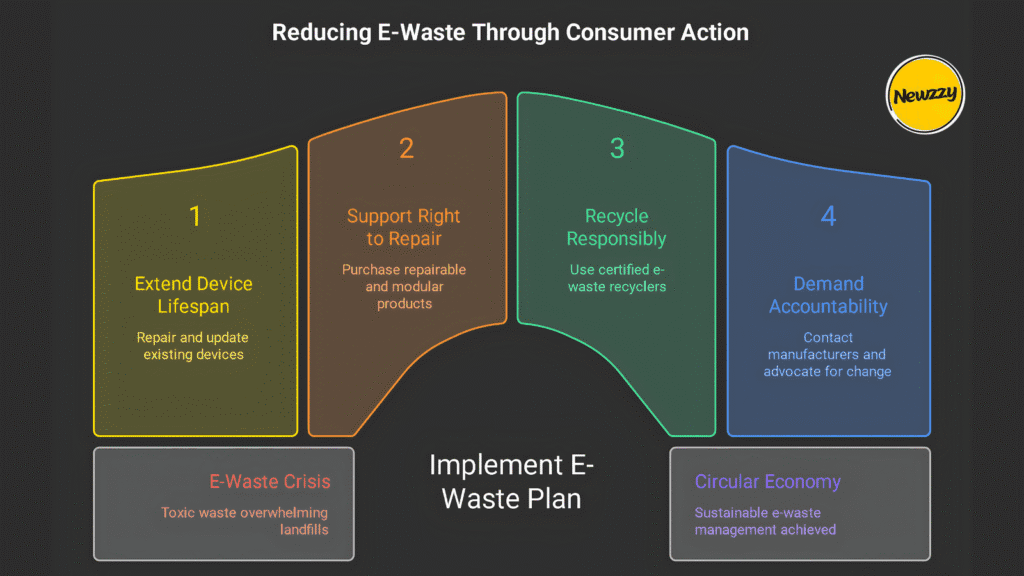
E-waste crisis is a system, nevertheless, consumer behavior is the driver of the market. You will be able to end the cycle of planned obsolescence.
1. Extend the Device Lifespan
- The single best device that can be derived is the one you currently have. An additional year of phone usage will save a few kilograms of toxic waste in the stream.
- Repair: Resource sites such as iFixit can be used to repair broken screens or dead batteries.
- Software: You should update your devices with no bloatware to ensure they remain in good performance.
2. Support the “Right to Repair”
- Purchase items spending with companies making it easy to repair.
- Fairphone: A modular mobile phone that is made to be repaired by the user.
- Structure: Laptops in which you can replace all the parts including the keyboard and the processors.
- Scoring: Use iFixit Repairability Score to make a purchase.
How To Dispose E-Waste
Do not dispose a device in the garbage in case it is really dead.
- Recyclers: Find e-Stewards certification. It is the best standard in the recycling of electronic equipment and assures no toxic wastes are shipped to developing countries.
- Keep away Generic Bins: watch out of retail collection bins which fail to give clear information on the processing destination of the waste.
4. Demand Accountability
Contact the manufacturers and inquire about the fate of the materials which are recycled. Voice creates on social media platforms to set off greenwashing and sponsor a bill that would put corporations in charge of the full lifecycle of their products.
The e-waste crisis represents the dark side of the digital Age literally. The circular economy is no longer optional anymore since we are heading toward 82 million tons of waste in 2030, so we are forced to survive. It takes less time than you imagine that the product that shines on a bright store shelf, and then a buttered pit in Ghana.
