

Mexico has passed levies of up to 50 per cent on selected products imported by Asian countries including Indian and Chinese ones four months after the US had imposed 50 per cent tariffs on India on most of its goods.
The tariffs that are implied to protect the national industry and producers will become suitable since January 1, 2026.
According to El Universal, one of the Mexican dailies, Mexico has levied taxes on the imported goods of auto parts, light cars, clothing, plastics, steel, household appliances, toys, textiles, furniture, footwear, leather goods, paper, cardboard, motorcycles, aluminium, trailers, glass, soaps, perfumes, and cosmetics.
Their influence will be felt on nations that are not the trade partner of Mexico in the trade agreement such as India, South Korea, China, Thailand, and Indonesia.
What Is the Rationale behind imposing tariffs by Mexico?
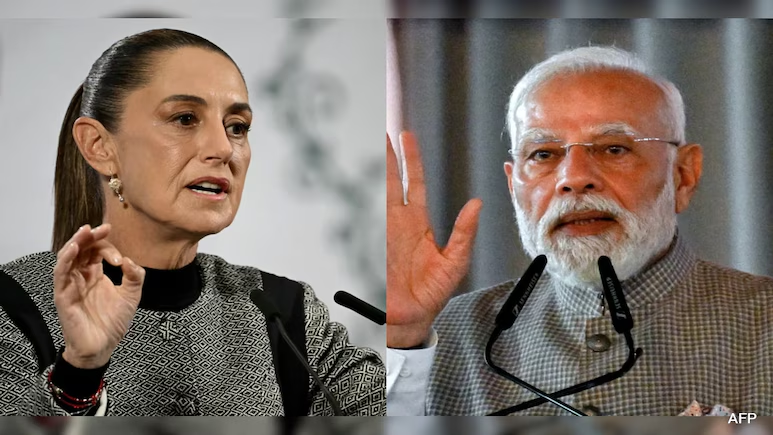
The Mexican government is trying to weaken its dependency on imports of the Asian nations in the Asian region and particularly China, which has a huge trade balance with Mexico. In the meantime, China on Thursday declared that it has never supported unilateral tariff increases in all its incarnations and calls on Mexico to rectify its misguided ways of unilateralism and protectionists prematurely.
China will be the most hit one as Mexico imported $130 billion of products of the country to the country in 2024.
The suggested tariffs will further yield more revenue of US 3.8 billion (approximately Rs 33, 910 crore).
The Mexican president, Claudia Sheinbaum, also aims at protecting the industry of the country more and producing more internally.
This, according to us is to create jobs by supporting [Mexican] industry. According to mexiconewsdaily.com, Deputy Ricardo Monreal, the Morena head in the Chamber of Deputies said,
Nonetheless, as reported by El Financier, a Mexican economic news source, analysts feel that the tariffs are more about placation of the US, prior to the review of the United States-Mexico-Canada.
How Will It Impact India?
According to a report by the Reuters, the Mexican tariffs will impact a billion dollars of shipment by key Indian car exporters, including Volkswagen, Hyundai, Nissan and Maruti Suzuki.
The level of the import duty on cars will increase to 50 percent, as compared to 20 percent, which will be a great setback to the largest car exporters in India.
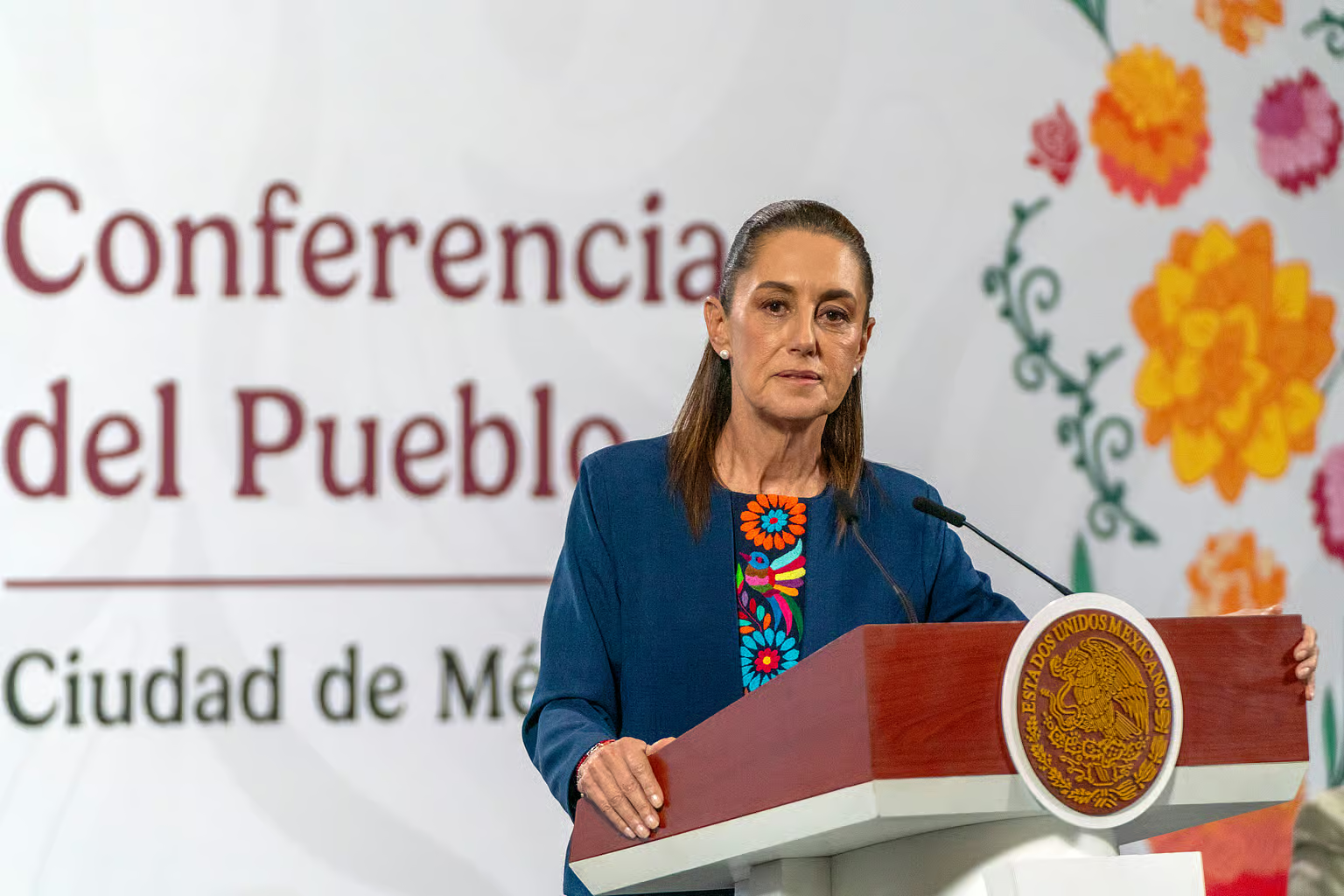
The tariff increase is likely to affect the Indian automobile export to Mexico directly, and the industry body wanted the Government of India to help in reaching out to the Mexican government to permit the good letter to the commerce ministry ahead of the finalisation of the tariff.
Saudi Arabia and South Africa are followed by Mexico which is the third-largest car market in India, in exports.
Although the Mexican crude exported to India amounted to $1.6 billion last year, this year, the exports amounted to the same in September alone, but with the government focusing on refining at home, Mexico central bank records showed that the value of the crude being shipped to India is only in the region of 291 million dollars this year. Sheinbaum suggested the levies of over 1,400 types of imported goods in the form of cars, auto parts, steel, toys and furniture and levies of 10% to 50% in September. It is directed to imports of countries where Mexico is not having a free trade agreement such as China and India.
The plan was thwarted until at least December, though, since local business lobbies have been protesting as well as ruling party members themselves. According to critics, Mexico ought to stop having too much dependence on the US buyers of its exports.
Sharma is seeking to convince Sheinbaum to reconsider the tariff plan that is in the process of being processed in the Congress where her majority party holds the senate seats.
He said hopefully that these tariffs do not affect India at least.
The veteran diplomat serving in Indian missions in the US, Russia and the Netherlands among others went ahead to propose a bilateral free trade agreement would eventually be signed, citing years long deliberations on a feasibility of study.
The US president Donald Trump has not left India out in his trade war albeit they are in the process of reaching an agreement with the US. It has strengthened negotiations with the EU and Australia in a move to diversify the supply chains and create new markets. Trump has also ordered punitive 50% tariffs on Indian goods that have driven New Delhi to re-establish its relationship with China besides establishing a closer trade relationship in the Latin American region like with Chile and Peru.
For more updates follow: Latest News on NEWZZY
