

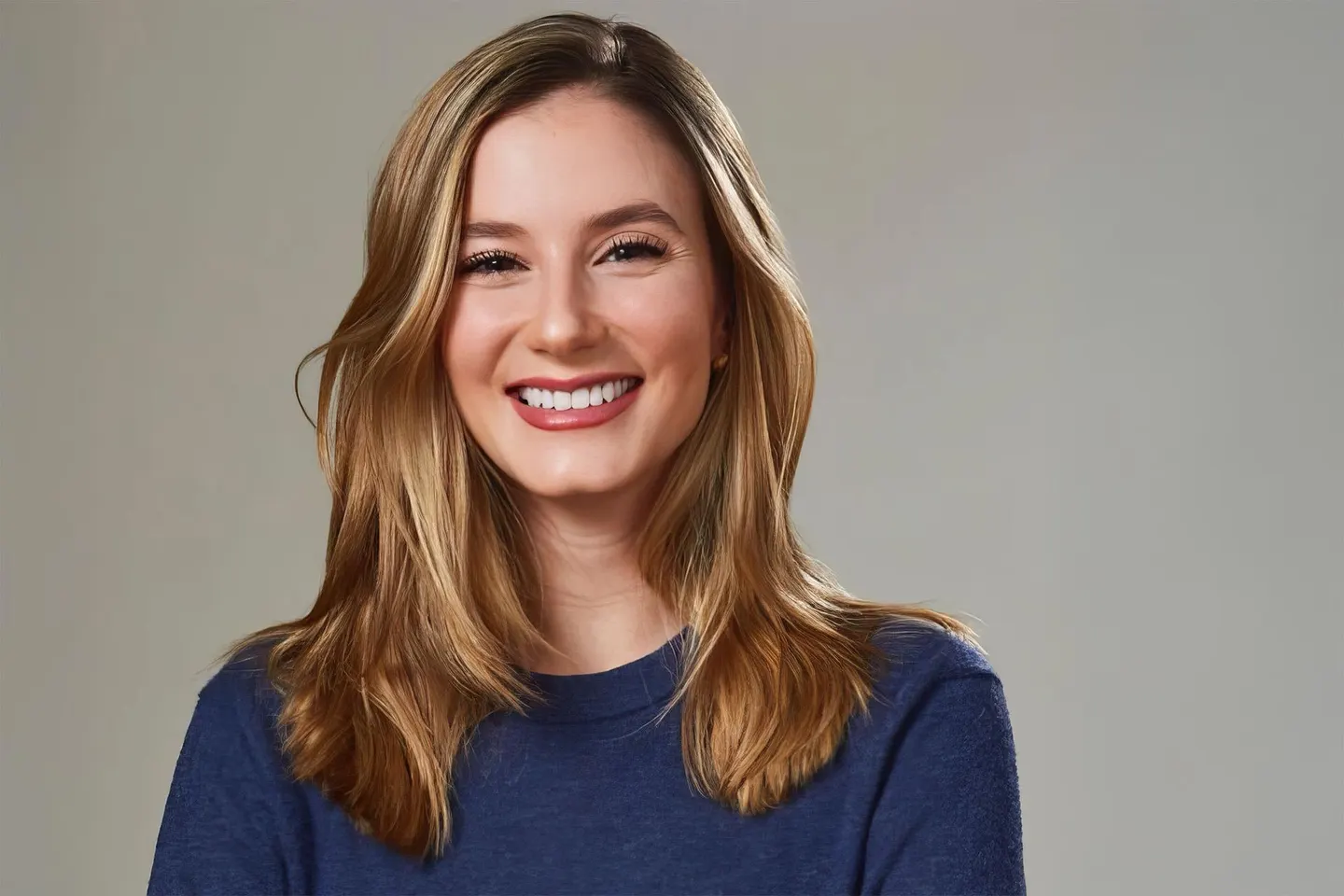
Luana Lopes Lara is the youngest self-made billionaire woman in the world who is 29 years old. Her prediction market service, Kalshi, has lately experienced a valuation of up to 11 billion dollars, which blasted her to the status of a billionaire. Lara has been ranked at a higher position than Scale AI, Lucy Guo, who had just passed Taylor Swift, Forbes reported.
Childhood, Ballet and school

Lopes Lara was born in Brazil and received a training of a professional ballerina at the Bolshoi school, which she defined as being even more rigorous than MIT. She worked professionally in Austria at some time after high school. She was an excellent student, and a daughter of a math teacher and an electrical engineer, inspired by her parents, she won some gold and bronze medals in national and regional science/math Olympiads in Brazil.
She went to the United States to further her studies and graduated with a degree of computer science and mathematics at the Massachusetts institute of technology (MIT). As a student at MIT, she had an internship work experience in some of the leading financial companies such as Bridgewater Associates, Citadel, and Five Rings Capital as a quantitative trader.
The creation of Kalshi and Billionaire Status

The concept of Kalshi was developed out of their internships in 2018 in New York City by Lopes Lala and her cofounder, Tarek Mansour (both MIT graduates). They saw the market has existed with a gap where one could directly buy and sell on the results of in-the-real-world events. In an interview with Forbes, Lara explained that, most of the trading activities occur when individuals hold some opinion about the future after which they attempt to find a means of expressing the same in the markets.
The two sought to become a recognized contract market in the country on which they were subject to extensive regulation and legal struggles against Commodity Futures Trading Commission (CFTC). They later prevailed in a landmark case in September 2024, making it possible to trade regulated election in the US.
The value of Kalshi has grown exponentially, with a valuation going up in June 2022 at a value of 2 billion and December 2025 of 11 billion with a 1 billion round of funding. This round came at a time that both cofounders were already billionaires. The personal net worth of Lopes Lara is approximated at 12% in Kalshi, worth 1.3 billion.
Spanish-born and Lebanese-born Lopes Lara and Mansour employed both of them as computer science majors at MIT, met at the same friend group of foreign students, and attended most of the same classes. Mansour, the survivor of the 2007 conflict in Lebanon, who taught himself English when studying the SATs, recalls how Lopes Lara was constantly sitting at the front of at least one of the lectures.
The two have grown intimate following his act of sitting next to her in the classroom to learn and even closer after two secured internships at Five Rings Capital in New York City in 2018. One day as they were walking back home to their intern apartments in the Financial District, a thought of a prediction market business came to them.
As Lopes Lara once put it in Forbes, it is observed that when people have some opinion about the future, then they seek to make arrangements to place that in the markets. She said that traders would identify external events (the outcome of an election or the potential occurrence of a natural disaster) in their investment decisions.
Having the belief that it was possible to directly trade on the aptitude of events as opposed to trading on the aptitude of the occurrence indirectly via conventional financial marketplaces, Lopes Lara and Mansour submitted to the accelerator Y Combinator and were accepted in 2019.
However, prediction markets were not clear about being legal and the cofounders turned out to have a daunting task ahead of them. Michael Seibel, the partner emeritus of Y Combinator, remembers that when the pair came to him for the first time seeking legal assistance, they made phone calls to more than 40 law firms, none of which agreed to assist since the founders were too young and their firm too small.
“We were going to school right out of college and we were risking our heads off. Two years no product, no product, nothing introduced and had we not managed to get regulated, the company would simply go to zero”, says Lopes Lara, as he was trying to build the business in London during the pandemic, and Mansour was in Beirut.
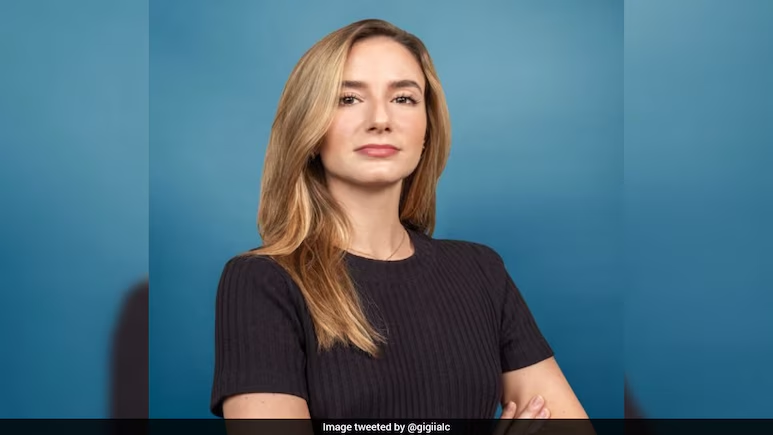
He was present at the fatal port explosion in the city that claimed the lives of more than 200 people, and spent weeks during the night in Kalshi, and during the day doing cleaning and searching the bodies of his neighborhood and looking for those who survived.
It only required one attorney to agree to their request: Jeff Bandman, a former employee of the CFTC, assisted the founders in navigating their application to be approved by the federal authority as well as negotiating with their regulators whenever it resisted. In November 2020, Kalshi was ultimately approved by CFTC to become a designated contract market (DCM) and their prediction markets were classified as a form of derivative called an events contract.
They were also distinguished in the competitive arena as a result of the approval. Polymarket is a blockchain-based market established in March 2020 and not federally regulated, and fined by the CFTC, who deemed its operation unregistered markets, in 2022 in the amount of 1.4 million. All that provided Kalshi with an advantage, provisionally. Polymarket was approved to launch in U.S in September. In October, its founder Shayne Coplan was made one of the youngest billionaires at 27 years old after New York Stock Exchange parent company invested 2 billion in the company only to earn him the target.
That was not the end of the struggle to regulate. In late 2023, when the regulators disapproved the election contracts of Kalshi before the 2024 U.S. presidential election on the argument that they were similar to gambling, it was Lopes Lara, who came up with the idea of suing the CFTC. Partovi remembers that that would be a horrible idea, what all other investors in the company claimed. But the duo did so anyway.
Kalshi won the lawsuit in the U.S. District Court in September 2024 and the company became the first to conduct legal contracts of elections in the United States in more than a century.
For more updates follow: Latest News on NEWZZY
